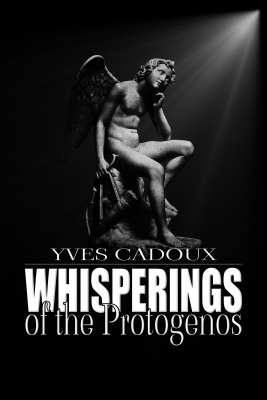
WHISPERINGS OF THE PROTOGENOS

Six interweaving tales of the soul’s return from exile, reclaiming the numinous inheritance that we lost.

Get the book

The Silent God: A Pagan boy in remote antiquity awakens to the mysteries of a forsaken god, tearing the veil between worlds.

A Tale of Two Realities: A medieval oblate and aspiring scholar ponders life’s unsettling questions while confronting men’s cruelty. Through friendship with a young Knight Templar and an older Cathar mystic, he sets out on the path toward uncovering profound revelations of his own.

The Savior Twin: An Alexandrian Gnostic manuscript once guarded by an occult society resurfaces in modern Seattle. Does it hold the key to freedom from the prison of the body? Could it map an escape from the cosmic trap?

Windeswaisen: A former disciple reflects on the esoteric teachings of Sen‑Nefer‑Ka‑Ra and the metaphysical legacy of the Orphans of the Wind.

The Memory Gleaner: The genesis of the Orphans of the Wind. Are you ready to follow them past the final threshold of the soul? And what, then, awaits at the journey’s end?

The Pearl that Lies in the Sea: A strange tale of wisdom, two destinies entwined, an unseen kingdom, and the prodigious secrets that bind them all—secrets hidden away by the artificers of reality.
Posted in Literature | Tagged , , , , , , , , , , , | Leave a comment

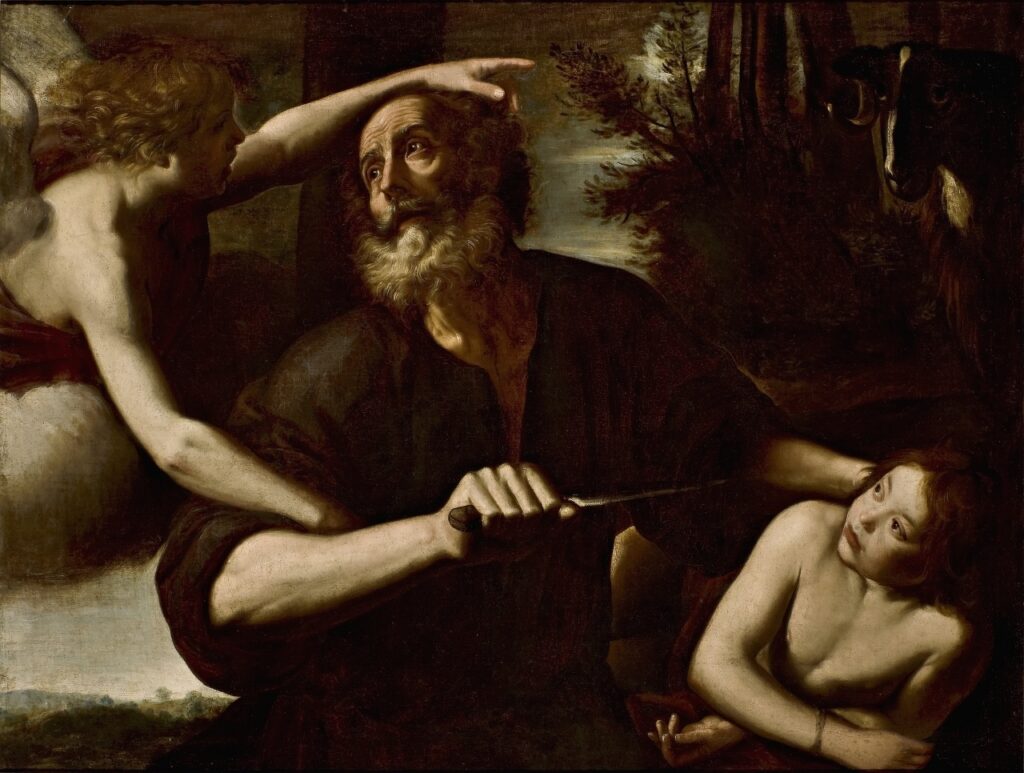
Isaac and the Angel

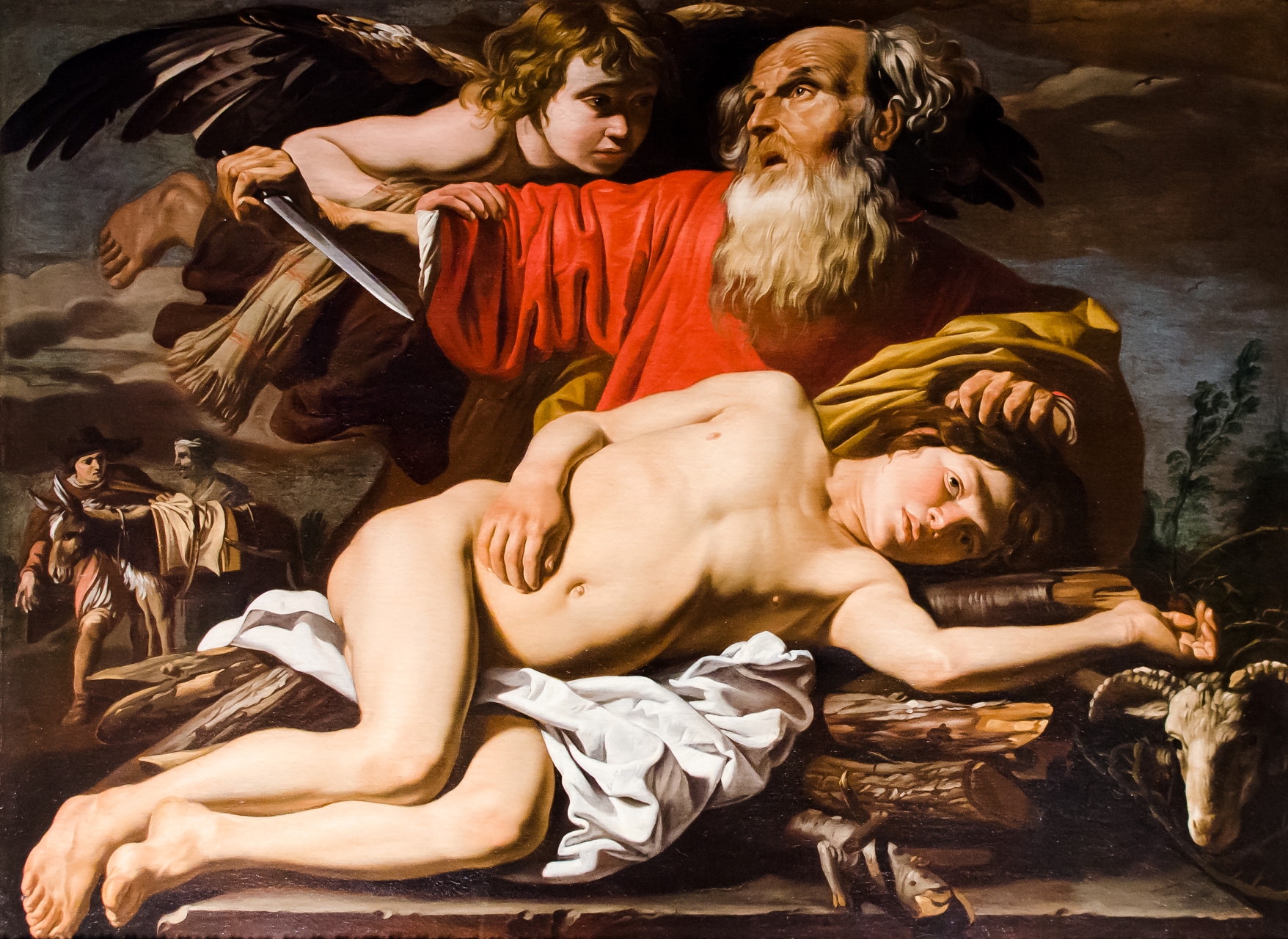
Matthias stomer le sacrifice dabraham BGB
Matthias Stomer

“Surely,” thought Yaldabaoth, “if I could flaunt the fanatical faith of just one man willing to make the most shocking sacrifice for my sake, the people would revere me with awe.” So, with a flair for grandstanding, he convinced an impressionable simpleton to sacrifice his first-born son in a way that would play well to the crowd. But when the time came and the devout lackey was about to plunge a knife into the youthful flesh of his heir, Eosphorus intervened and stayed the filicide’s hand to stop the horror. [source]

Abraham’s brutal attempt to sacifice his son stands, for reasons that remain unfathomable, as one of the most beloved episodes of Judeo-Christian mythology. It also became a major source of inspiration for Renaissance and Baroque artists. Yet when we look closely at most of those timeless masterpieces, we sense a story quite different from the one preached from pulpits.

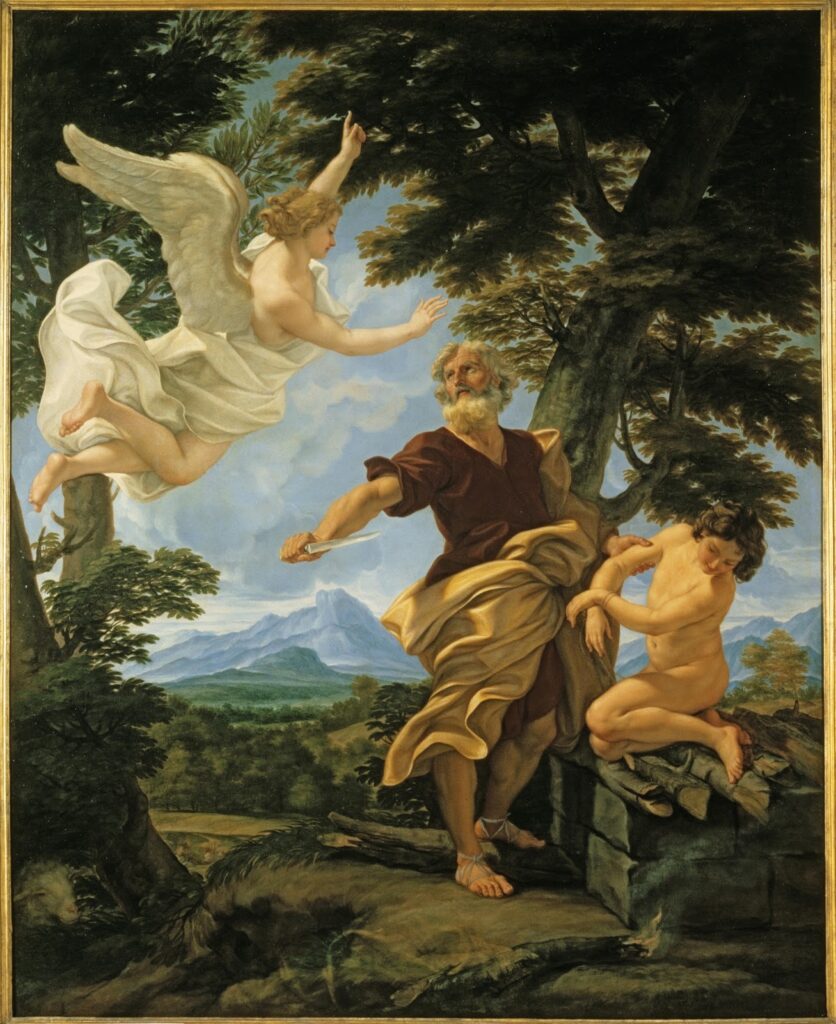
Baciccio (Giovanni Battista Gaulli), Italian, 1639
Baciccio

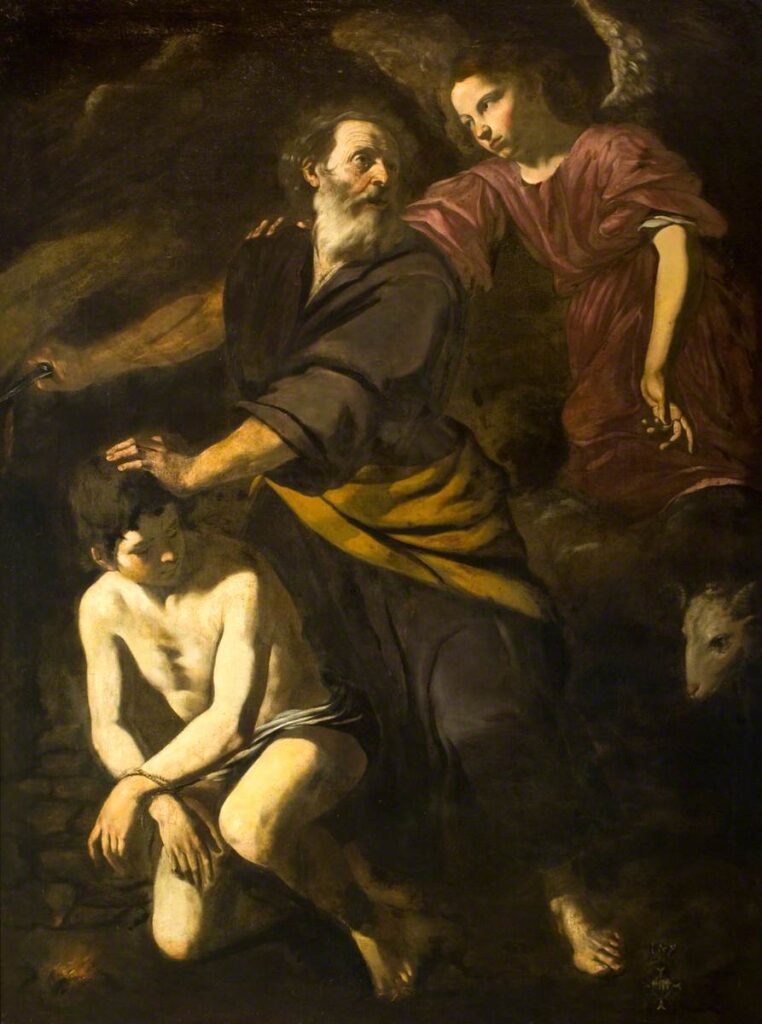
Notice how Issac and the angel are almost always depicted as beautiful youth bound by some mystical destiny, whereas dishevelled Abraham invariably appears as freshly escaped from Arkham Asylum for the Criminally Insane.

Various scholars suggest that the original story of Abraham and Isaac may have been of a completed human sacrifice later altered by redactors to substitute a ram for Isaac, and some traditions, including certain Jewish and Christian interpretations, maintain that Isaac actually was sacrificed. [source]

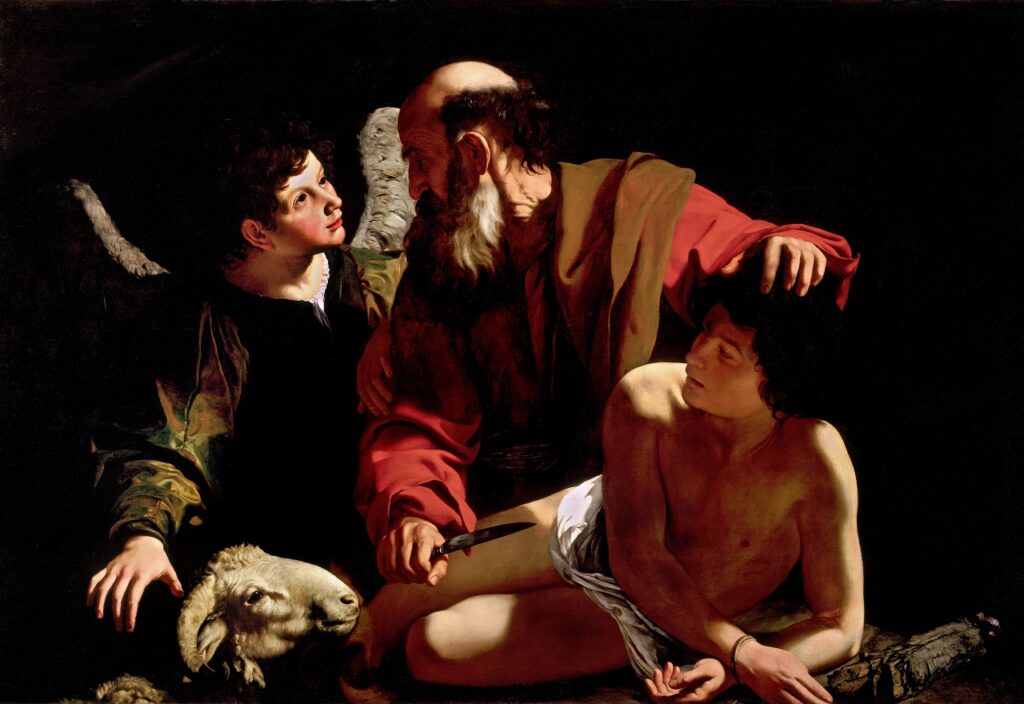
Caravaggio, Sacrifice of Isaac, ca 1603 BGB
Caravaggio, circa 1603

Senile (120+) or schizofrenic, Abraham hears a voice commanding him to kill his only son. Without a moment’s reflection, the old man assumes this to be the voice of God and does not think twice of killing his own child in horific circumstances. For millennia to come, millions of Jewish, Muslim, and Christian children would hear that this disturbing story is a beautiful lesson about faith.

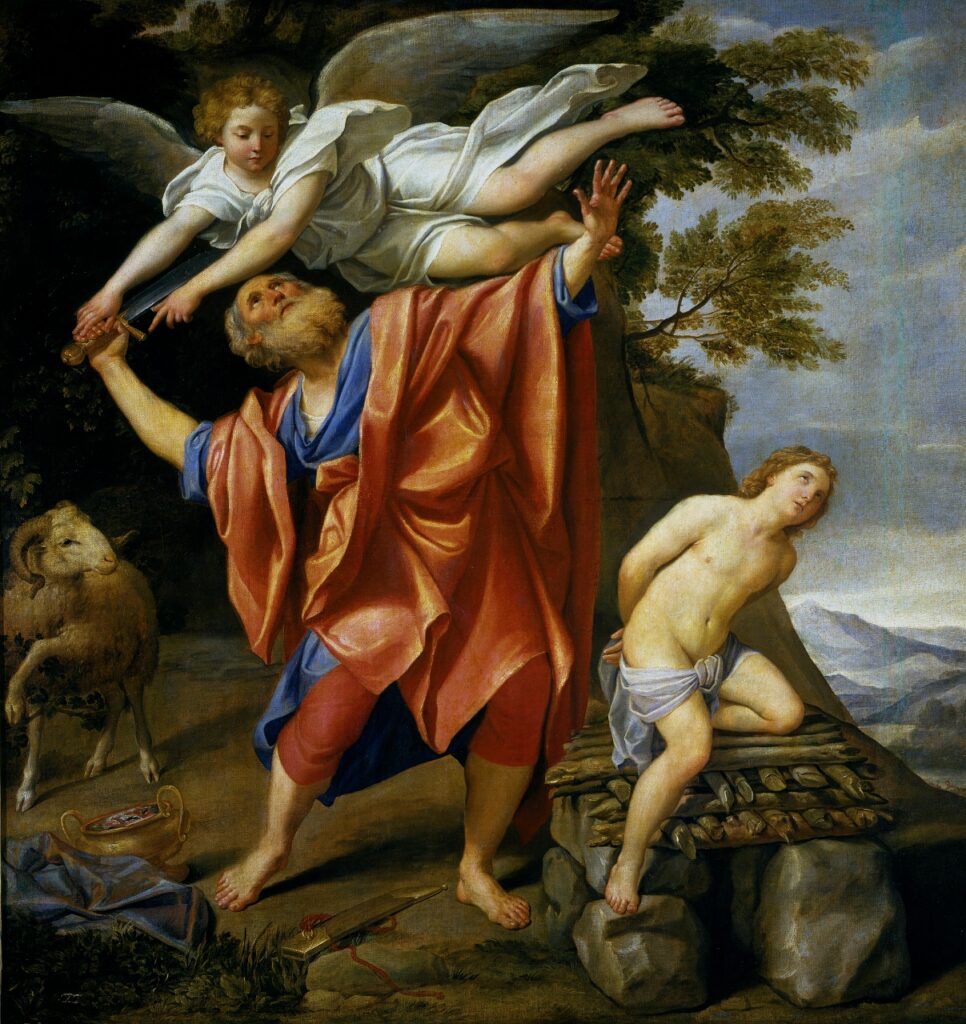
El sacrificio de Isaac (Domenichino) BGB
Domenichino

But let us look at the myth with fresh eyes and see if something more valuable can be extrapolated beyond the major religions’ creepy fascination with what is, at its core, an attempted murder.

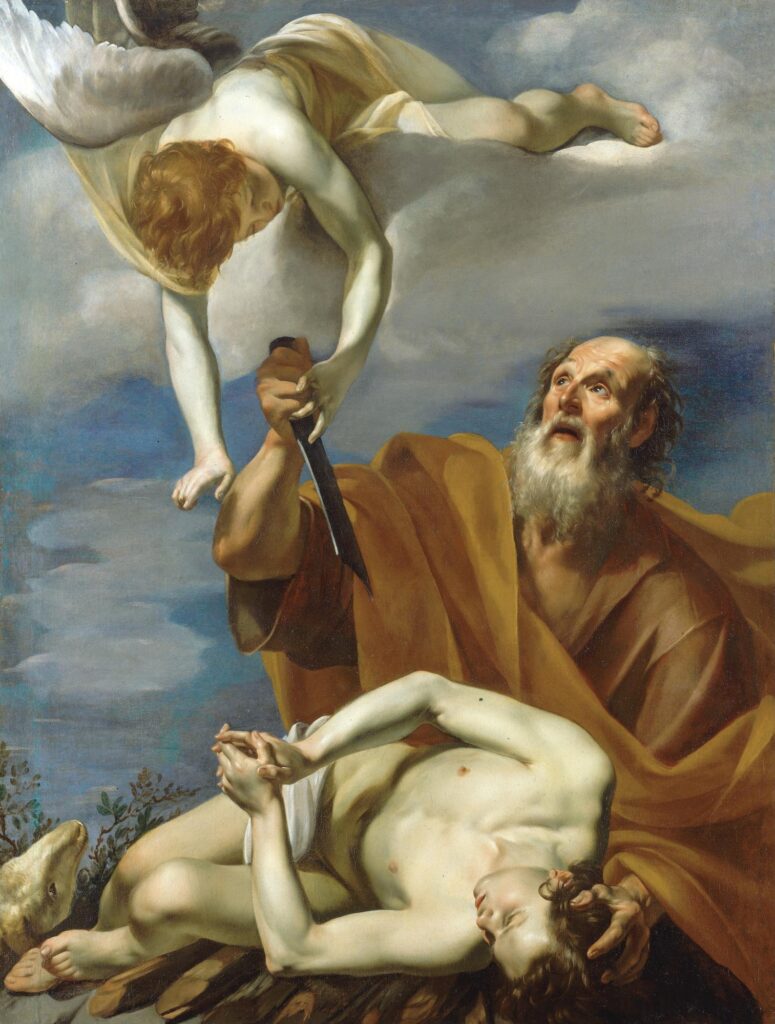
Giuseppe Vermiglio, Sacrifice of Isaac OR BGB
Giuseppe Vermiglio

Isaac stands for the human soul bound to the material world and sacrificed on the altar of worldly religion. Abraham represents the priesthood of the false cosmic god, whose agenda is to keep us trapped in his realm. But there is hope for us in the form of a beautiful gardian angel, our Savior-twin, who, in the biblical myth, intervenes in extremis to rescue the soul from her terrifying ordeal. The unwritten part of the myth is the apotheosis of the liberated soul who evades the clutches of physicality to join the Boy God in perfect henosis.

The mysteriosophy of the Savior-twin is articulated in my book.

More paintings of Isaac saved by the angel:

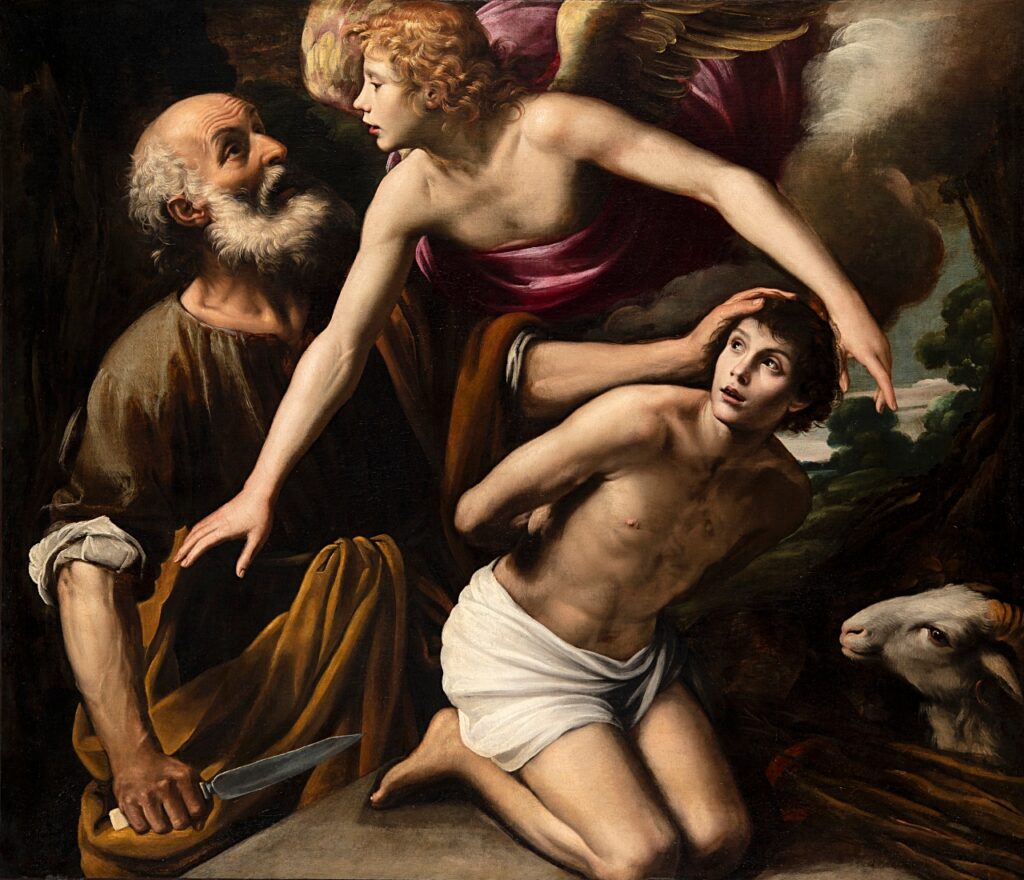
Orazio Riminaldi The sacrifice of Isaac
Orazio Riminaldi
Giuseppe Vermiglio Sacrificio di Isacco (ca. 1618 25) BGB
Giuseppe Vermiglio, circa 1618-25
Caracciolo, Giovanni Battista, 1578 1635; The Sacrifice of Abraham
Giovanni Battista
Posted in Art | Tagged , | Leave a comment

Angels

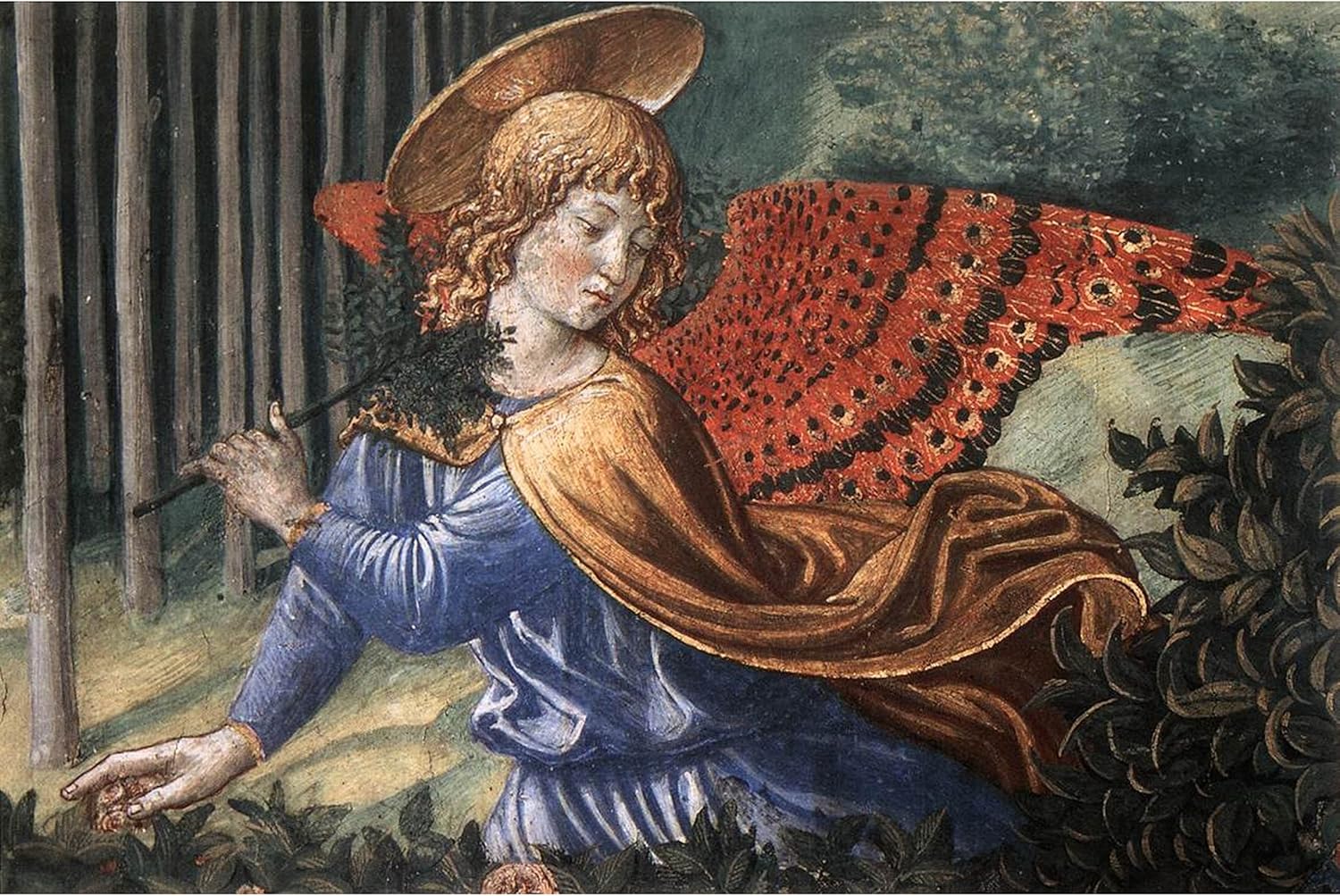
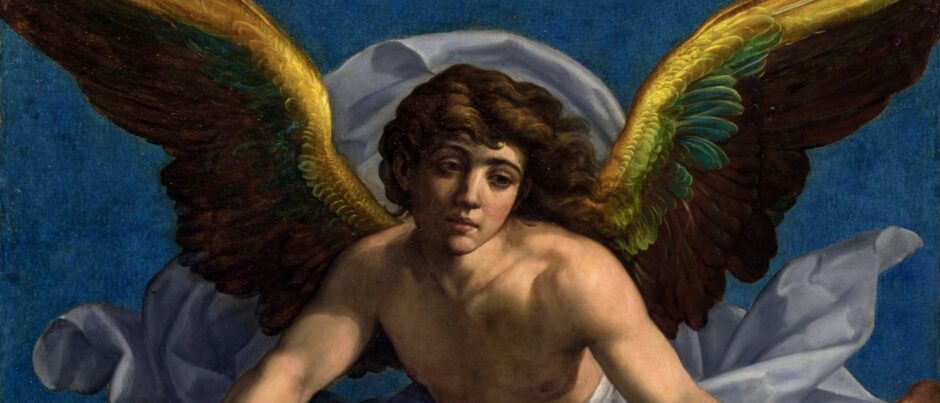
This beautiful angel figures in the center of Benozzo Gozzoli’s fresco Angels Worshipping.

From ages immemorial, when they first appeared in circumstances unknown, angels have fascinated humankind. Their influence can be traced as far back as the Babylonian empire and the Zoroastrian religions. Though they assumed many shapes and donned many disguises, we follow over the millennia the flight of those resilient and commanding beings who mediate between the psyche and the beyond.

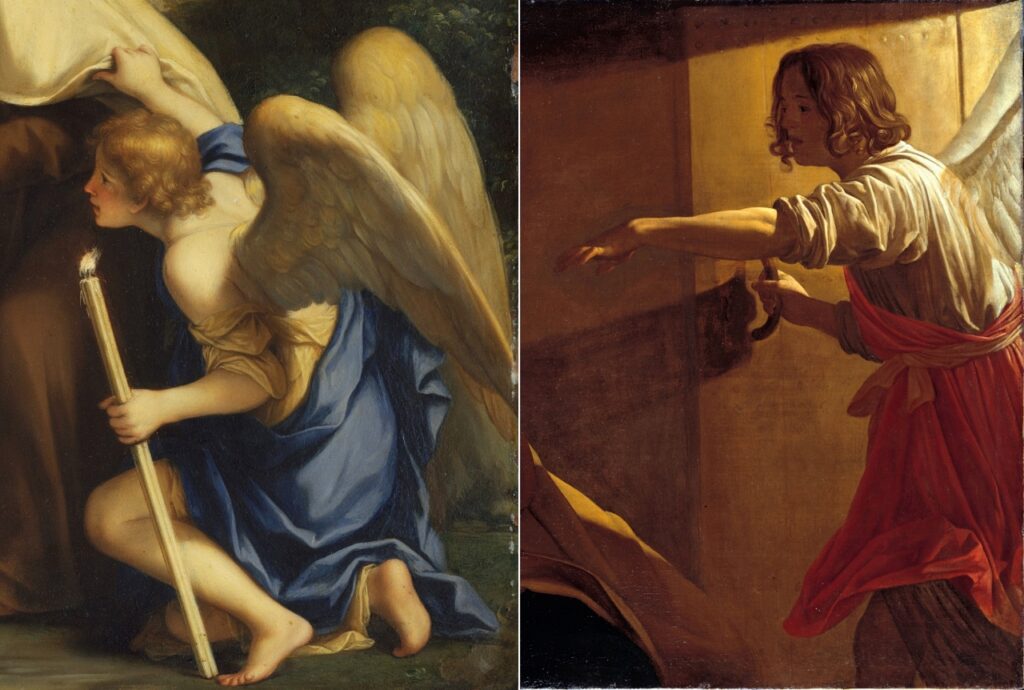
Marcantonio Franceschini, The Last Communion of Saint Mary of Egypt, 1680 (detail). side BGB
Angels by Marcantonio Franceschini, 1680, and Gerard van Honthorst, 1616-18

The scholar-mystics determined their place in the hierarchy of the heavens; the master glaziers and illuminators of the Middle Ages gave them their luminescence; the Renaissance and Baroque artists refined their androgynous allure while strengthening their bearing.

Guido reni, san rocco in carcere, 1617 18 BGB
Guido Reni, 1617-18

When the powerful messengers reached the peak of their rule, the Abrahamic God grew jealous and fearful of their equivocal, transcendent beauty and their unique bond with mankind. So it was that the Reformation made them disappear from one-third of Christendom.

Detail of the angels from Anton Rafael Mengs' La Adoración de los pastores, Museo del Prado, 1770 (1)
Anton Rafael Mengs, 1770, Museo del Prado

The vanished would eventually return, but under strict gender lines, with the incoming artificers of morality stripping them of sexual ambiguity: the pre-Raphaelites of the Victorian age feminized the divine ambassadors, while the propagandist imagery of the twentieth-century militant churches virilized them. And that wasn’t the end of their curse. New-Agers drew the celestial beings down to the commonplace, while the digital age vulgarized them, sealing the gates of their kingdom.

Detail of the angels from Anton Rafael Mengs' La Adoración de los pastores, Museo del Prado, 1770 (2)
Anton Rafael Mengs, 1770, Museo del Prado

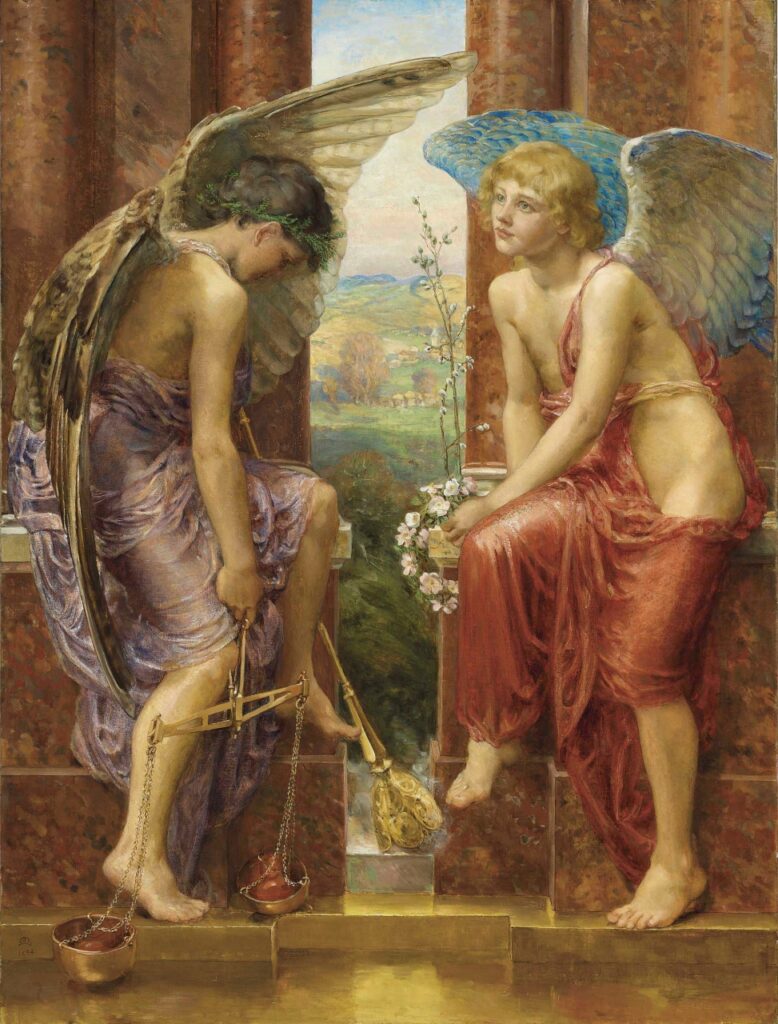
The classical angels, suffused with exquisite grace, have been displaced in our imagination by tawdry, fantasy creatures devoid of quintessential presence—a reflection of our increasingly clouded and erring minds. A hideous new breed of supernatural messengers, repulsive to aesthetic sense, brims with artificial light and colors to compensate for its hollowness. But light is not always beautiful, and when it is glaring, the beautiful angels are dying.

Anna Lea Merritt, The Watchers of the Straight Gate. BGB
Anna Lea Merritt, The Watchers of the Straight Gate

Posted in Art | Tagged , , | Leave a comment

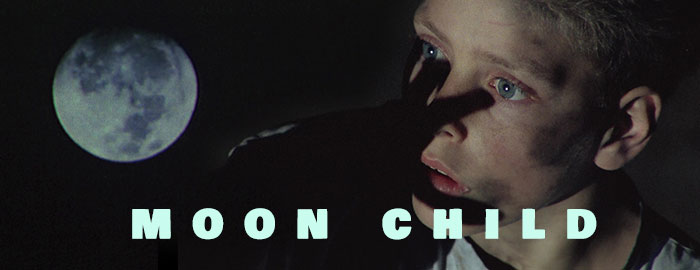
Moon Child (El niño de la luna) — 1989: A Boy God Lost in a Human World

Moonchild

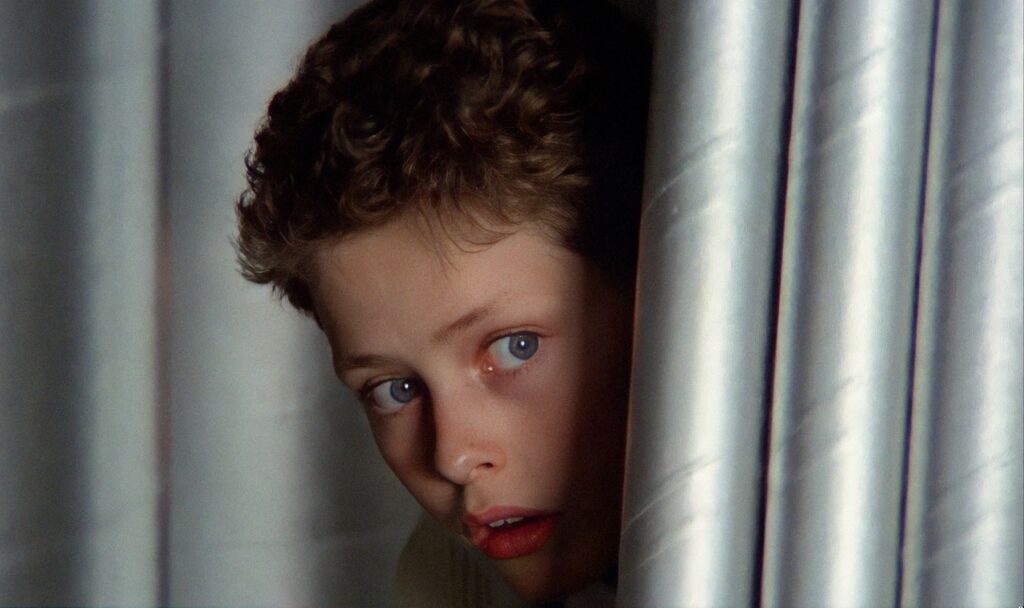
Agustí Villaronga’s El niño de la luna presents a group of orphans entangled in a secret project called “Moonchild,” which aims to summon a divine being through esoteric means. David (Enrique Saldaña), a young orphan with telekinetic powers, is adopted from an institution and brought to a research facility—a “treacherous semi-scientific cult”  where children with extraordinary mental abilities are studied. The organization’s goal? To engineer the birth of a supernatural being: the “Child of the Moon,” a figure prophesied by an African tribe who await a white boy who will become their god

Moon child Enrique Saldaña

The organization that captures the children is never explicitly named, and this ambiguity is essential. They represent something more universal than any specific secret society: they are the machinery of the world that seeks to instrumentalize the sacred. Their methods are clinical—genetic selection, controlled environments, systematic observation. They want to produce the Moon Child through “breeding a superior being” 

The Boy God, however, does not belong to the sun-drenched world of men; he belongs to the reflected light of the celestial. The moon is not merely a celestial body here; it is a governing presence. Scenes bathed in lunar light feel suspended outside time, as though the child’s destiny is being inscribed upon him by the moon rays themselves. He is pulled into being by lunar gravity, as though the cosmos itself requires him.

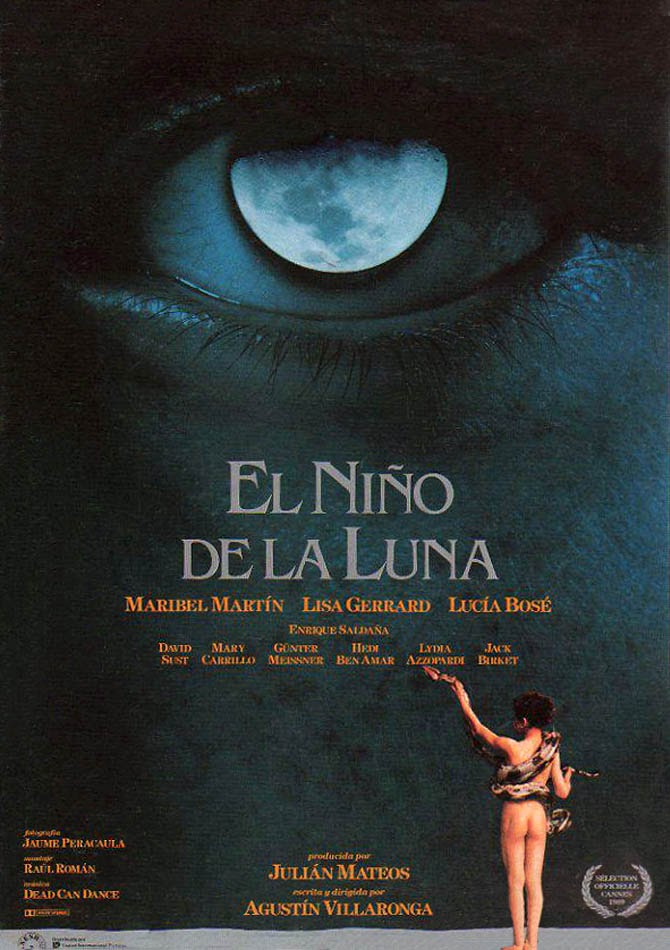
Moon child poster

There are films that tell stories, and there are films that feel like they were dreamt before they were written. El niño de la luna belongs firmly to the latter category—a work suspended between myth and memory, where narrative logic yields to ritual logic, and where the child at the center is less a character than a metaphysical disturbance. It is not a superhero origin story; it is a dark, ritualistic exploration of occult philosophy and the heavy burden of divinity.

Villaronga draws from different traditions of the Boy-God archetype, but he refuses to anchor the child in any single one. The result is a figure who feels universal and unsettling—a child who is both miracle and omen. The film’s metaphysical meaning is not delivered through exposition but through atmosphere. The metaphors are purposely unclear; the imagery does not explains, it awakens.

What makes El niño de la luna enduring is its refusal to resolve its mysteries. The film offers no neat theological system, no clear moral. Instead, he gives us a mythic space in which to contemplate power, innocence, and the human hunger for transcendence. It suggest that the divine is not a comfort but a rupture. The Boy God is not a classic savior figure; he is a question—one that destabilizes every character who encounters him.

Posted in The Screen | Tagged , , | Leave a comment

Adonis

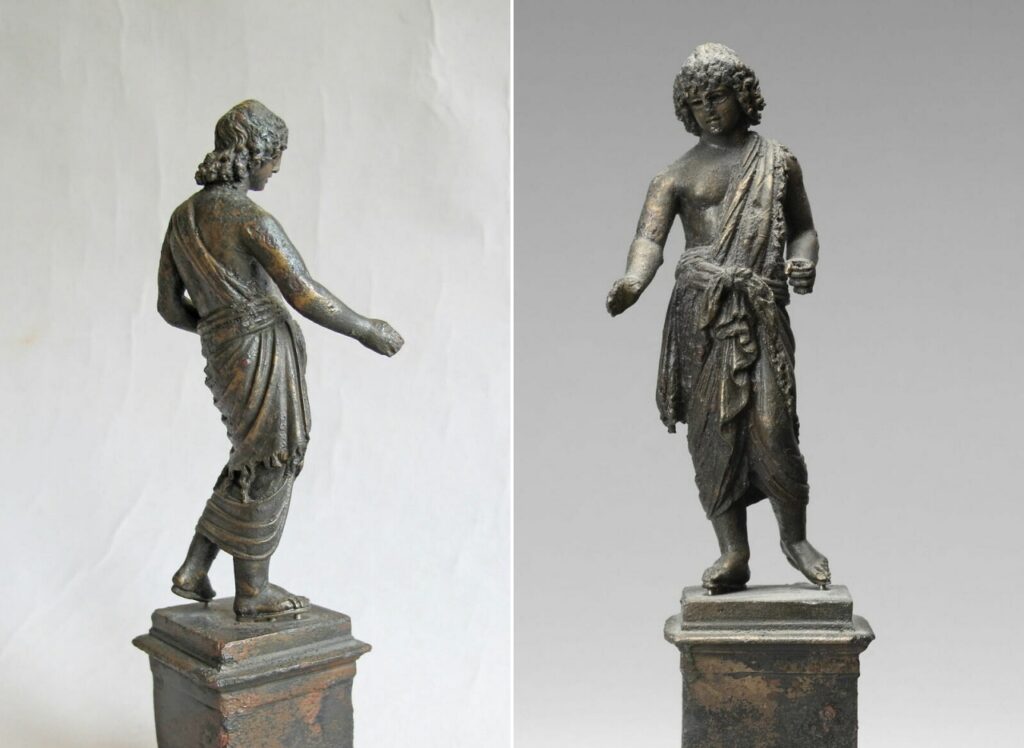
Bronze statuette of Adonis 100 50 CE (3) 8 side
Bronze statuette of Adonis 100-50 CE

Before, the petty, jealous, and sadistic mountain jinni Yahweh appropriated the title “Adonai” in a bid to lord over our sphere, the handsome, ever-young Boy God Adonis was worshiped by the Phoenicians, and in the unspoken mysteries of the Greek women. A myth telling us how a wild boar killed the graceful ephebe becomes an allegory for our time: the boorish one-God has supplanted and murdered the classical Boy Gods of passion and ecstasy. We created a lawgiver to justify the abuses of society; we pray a Heavenly Father to bless our wars and our armies, to grant victory to a politician or a sport team; we have conjured a Rex Mundi who revels in our hysteria and oversees our slow, steady, descent into the crushing gears of a materialistic system.

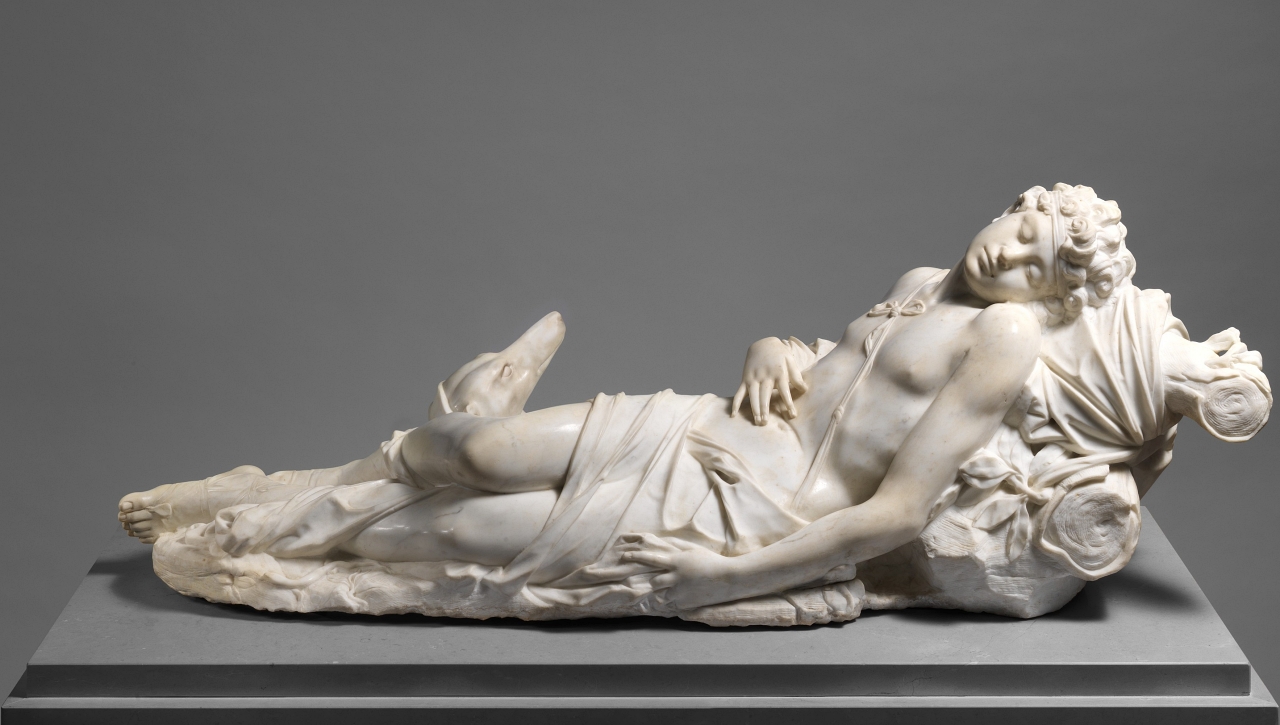
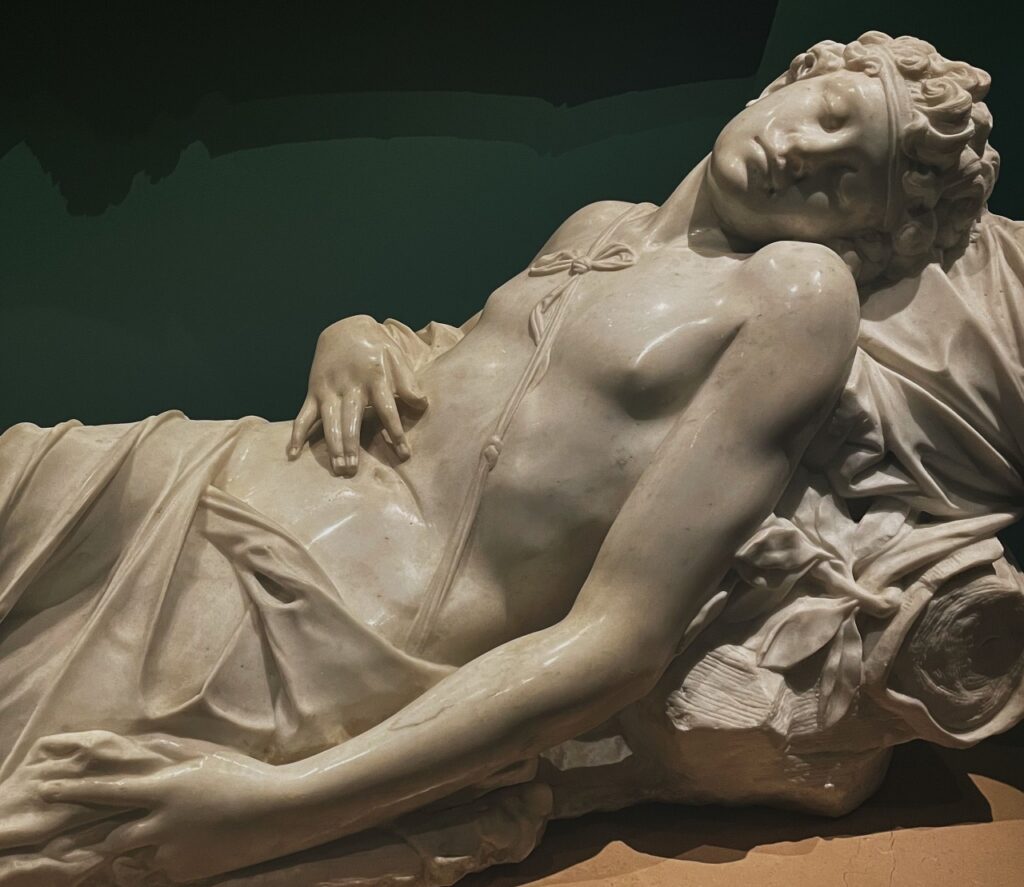
Antonio Corradini, Adonis, 1725 (3) wp
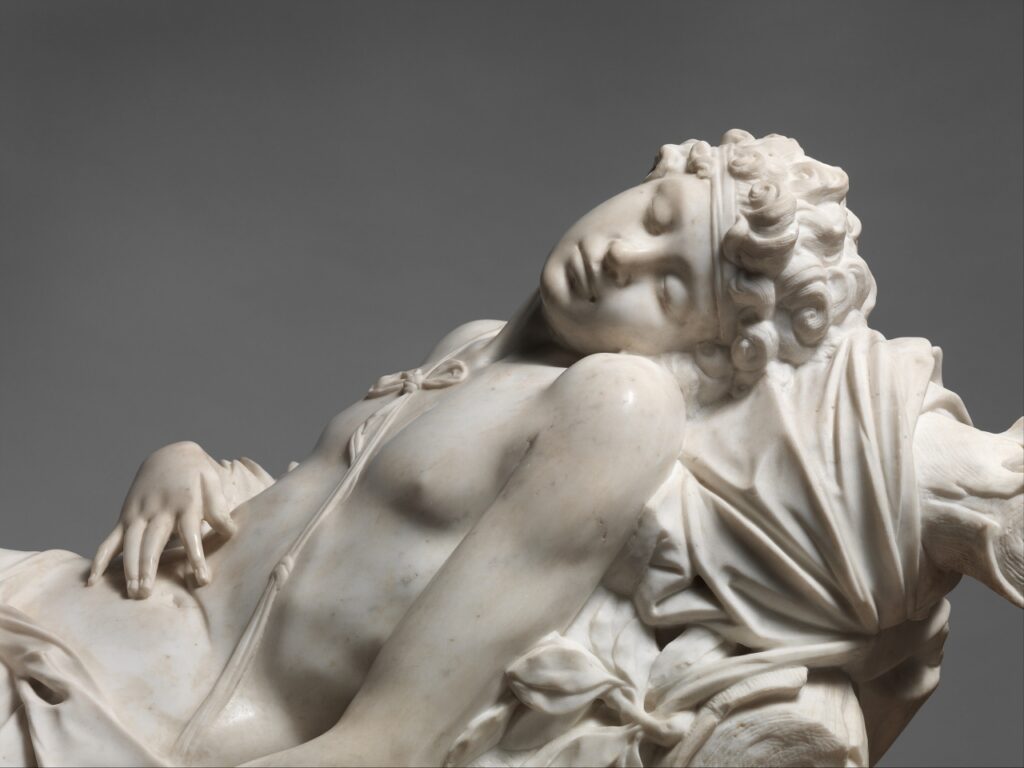
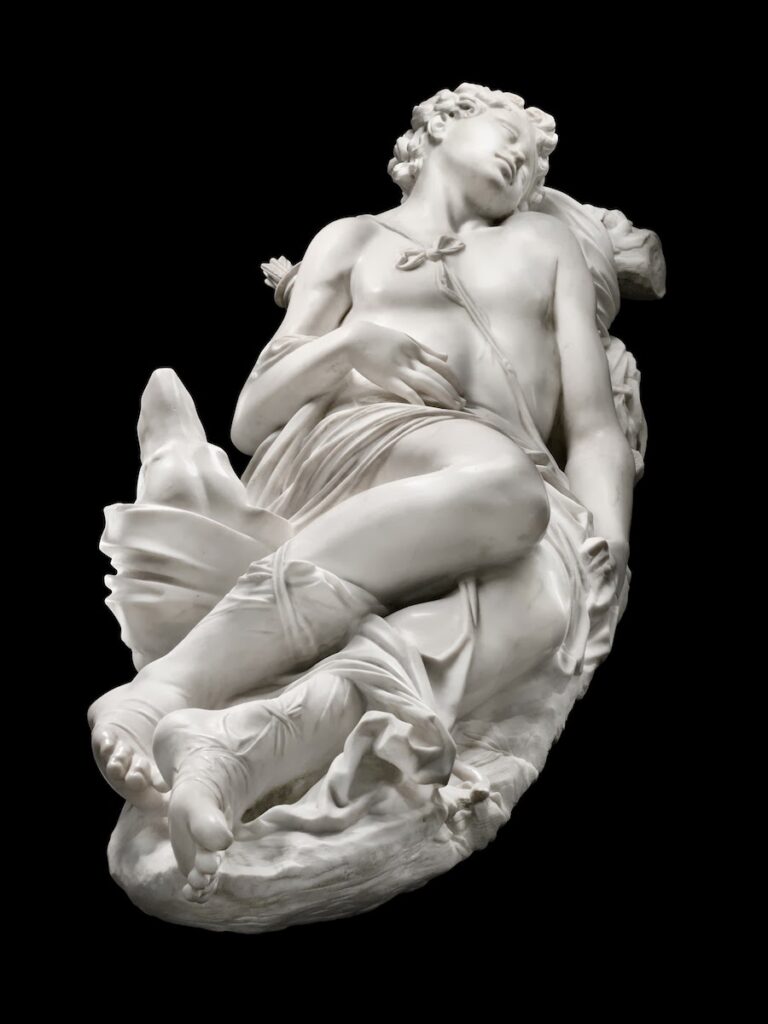
Antonio Corradini, Adonis, 1725

The myth of Adonis originates in the ancient Near East—especially the Levant and Mesopotamia—and was later adopted and reshaped by the Greeks. What remains constant across these transformations is Adonis’s essential nature: beauty as a force in itself, youth as a sacred state, desire as something that transcends categories and hierarchies. Gods desire him, goddesses war over him, mortals mourn him, and through it all, he remains the passive center, the beautiful object that moves others to action.

Antonio Corradini, Adonis, 1725 (1) wp

Adonis, however, represents something more specific than mere beauty—he embodies the concept of the kouros, the eternal youth suspended at the threshold of manhood. Unlike gods like Zeus or Poseidon who wield mature masculine power, or even Apollo who represents idealized young adulthood, Adonis exists in perpetual adolescence.

Antonio Corradini, Adonis, 1725 (2) wp

This isn’t incidental; it’s the very core of his divine nature. In a pantheon full of gods who do things (Zeus rules, Athena strategizes, Ares fights), Adonis simply is. And that being is enough to shake the cosmos. He is not a husband. He is not a father. He is the beloved. His entire identity is relational: he exists to be desired. Adonis is less a character than a principle: the principle that beauty and youth possess their own form of divinity, independent of power, wisdom, or action.

Antonio Corradini, Adonis, 1725 (4)

In a metaphysical sense, Adonis is the fleeting image of perfection that haunts all art and love. You glimpse him in a face, a sunset, a moment of joy, and then he’s gone. To love Adonis is to love what you cannot keep in material existence but can hope for in another world.

Posted in Art | Tagged , , | Leave a comment